On This day: Death of Empress Theodora
Posted on
On this day in 1056, the Empress Theodora passed away. After starting out life as a Princess, spending most of her adult life as a Nun, and then facing the jealousy of her sister, Theodora ended up ruling despite the best attempts at many others to keep her in a subservient position.
Born into the Purple
Theodora was the youngest sister of Zoe Porphyrogenita, a word that means "born into the purple". The two girls were the daughters of a reigning Byzantine Emperor, Constantine VIII, who was joint-ruler with his brother Basil II. The death of both men, neither of whom had a son, pushed both Theodora and her sister in to the limelight.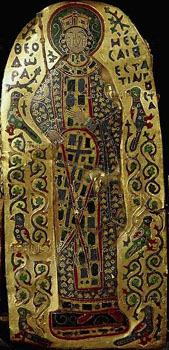
Theodora appears to have been a woman with her own mind. Her father had arranged for her to marry Romanos Argyros, who was expected to take the throne and rule through his wife. Theodora refused to go through with the marriage, and in the end Romanos married her older sister Zoe.
In the following years Theodora was implicated in multiple plots against the royal couple. Many historians believe that these were attempts by Zoe to marginalise her sister, and have her removed from any potential power. Although Theodora played no active role in politics, she would never be safe from her sister's jealousy. Eventually she was pushed in to a monastery and forced to become a nun, which should have stopped her from being allowed to rule in the future.
Coming To Power
Zoe went through several husbands over the following years, none of whom were particularly popular. After she was displaced by her adoptive nephew, the people of Constantinople rebelled, and both Zoe and Theodora were brought out of their respective places of captivity. Theodora in particular was furious at being pushed back in to power, but to the people she was the balance against her sister's terrible choice in men, both as husbands and heirs. She was crowned as co-Empress with Zoe, who tried to have her sister sent back to the monastery, only to be overruled by the Senate.
Theodora is believed to be the more capable of the two women, although how much of that is reflected from people's dislike of Zoe is hard to tell. Zoe wasn't inclined towards any actual ruling, but she disliked her sister taking control and getting things done. Yet another marriage meant that Theodora was required to leave the administration of the empire to her new brother-in-law, Constantine IX Monomachos.
She outlived both her sister and her brother-in-law, and subverted Constantine's attempts to bypass her in the line of succession. She was proclaimed sole "Emperor", and promptly set about assigning her own favourites as ministers. By ruling as an Emperor she offended plenty of people, who felt that a woman shouldn't be allowed to act as a supreme judge in courts, or appoint clerics. But her death led to over twenty years of fighting between numerous noble families, and after a while it must have seemed to her people that even the rule of a woman was better than the lack of stability caused by her death.
If you'd like to find out more about her sister, Empress Zoe, you can check out my e-book 30 Women in History Volume 2, which contains a mini-biography on her rival for power.
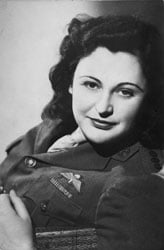 where she earned high praise for both her attitude and abilities. She was then parachuted in to France, where she met up with a local network. Her role was to oversee the groups finances and handle the division of weapons and supplies dropped by the Allies, but she was soon helping recruit new members, plan and oversee operations, and eventually came to lead over 7000 men. She claimed that her greatest moment was cycling a 300 mile round trip to get new wireless codes. She also killed a German sentry to prevent him raising the alarm, and shot a woman who was a German spy. In total her team killed around 1400 Germans, while suffering only 100 casualties.
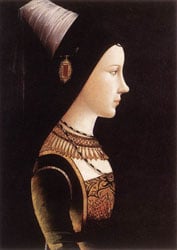 Isabella of Bourbon. Her mother died in 1465, leaving Charles with Mary as his only heir. The general view at the time was that a girl couldn't possibly rule, and therefore Charles decided to remarry. In 1468 Mary acquired a step-mother, Margaret of Burgundy, the sister of King Edward IV (and later, Richard III) of England. Margaret and Charles never had a child, but Mary became close to her step-mother, and it was Margaret who guided Mary's steps when tragedy struck again in 1477, when Charles died in the Battle of Nancy.
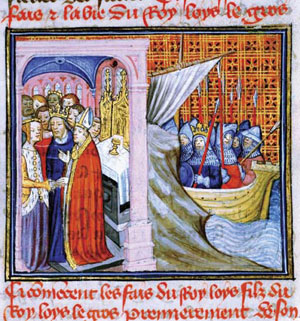 new
new 
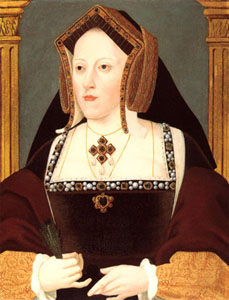 As any student of Tudor history will know, that was a marriage that did not last long or end happily. Catherine spent several years as a widow before marrying King Henry VIII within weeks of his father's death. There followed over twenty years of heartbreak as Catherine frequently miscarried, gave birth to stillborn babies or lost live children within weeks of their birth, with only one daughter name Mary surviving in to adulthood. To this day the reasons why the family was hit by so many tragedies has baffled scientists, especially as it then continued with Anne Boleyn (Jane Seymour had one live son but died herself, Henry's following three wives never had children by him).